
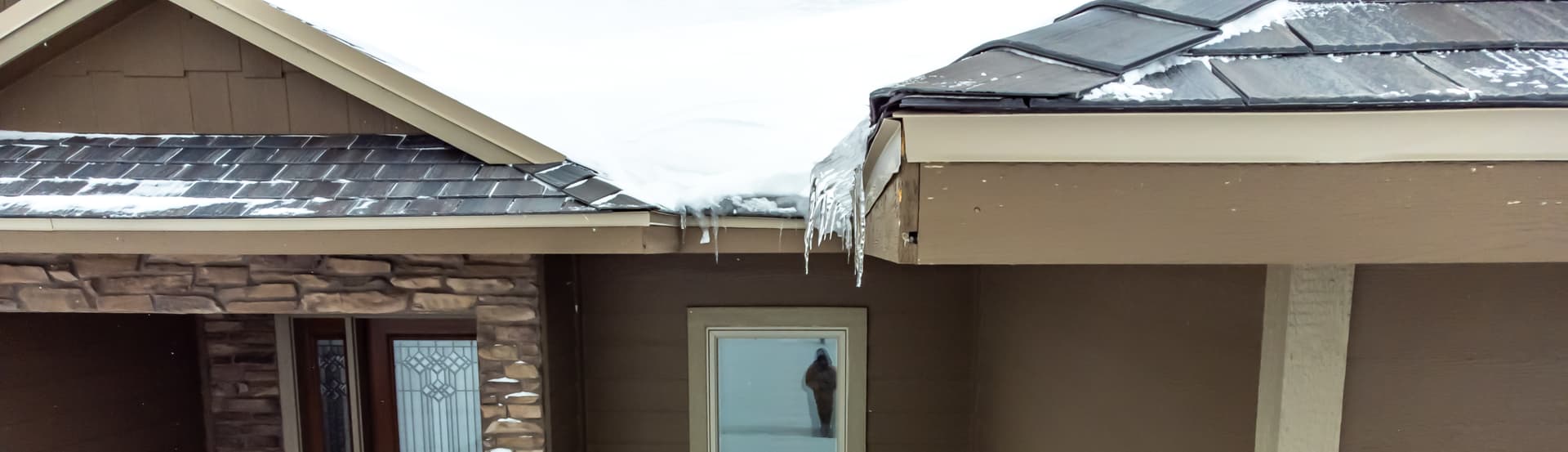
Every winter in the Chicago suburbs, homeowners discover water dripping from a ceiling or staining an upstairs wall — and assume they simply have a roof leak. Often, the real culprit is an ice dam: a ridge of ice that forms along the edge of the roof and forces melting snow back up under the shingles. By the time the damage shows up inside, the problem has usually been building for weeks.
At KBC Exteriors, we field these calls throughout the coldest months, and the frustrating part is that ice dams are largely preventable. The key is understanding that they aren't really a weather problem — they're a heat problem. Here's what causes them, how to spot the early signs, and what you can do this October to keep them from forming at all.
What Actually Causes an Ice Dam
Ice dams form from an uneven roof temperature, and that unevenness usually starts inside your home.
Heat escaping into the attic — from inadequate insulation or air leaks — warms the underside of the roof near the peak. That warmth melts the bottom layer of snow sitting on the roof.
The meltwater runs down toward the eaves, which hang beyond the heated part of the house and stay much colder.
At the cold edge, the water refreezes, building up into a dam of ice. As more snow melts above and hits that barrier, water pools behind it — and with nowhere else to go, it works its way under the shingles and into your home.
That's why two houses on the same street can get the same snowfall, yet only one develops ice dams. The difference is almost always insulation and ventilation.
Warning Signs to Watch For
The earlier you catch an ice dam, the less damage it can do. Look for:
- Thick bands of ice or large icicles forming along the roof edge and gutters
- Water stains or damp spots on upstairs ceilings and exterior walls
- Icicles hanging behind the gutters, against the fascia
- Uneven snowmelt on the roof — bare patches near the peak while the eaves stay iced
- Peeling paint or moisture near the top of exterior walls
If you're seeing heavy icicles paired with interior dampness, treat it as urgent — that combination usually means water is already getting in.
How to Prevent Ice Dams This Fall
Because ice dams start with escaping heat, the best prevention happens before the snow arrives — which makes October the ideal time to act.
Improve attic insulation. A well-insulated attic keeps household heat where it belongs and the roof deck uniformly cold, so snow doesn't melt unevenly.
Ensure proper roof ventilation. Balanced intake and exhaust ventilation lets cold air flow beneath the roof, keeping its temperature consistent from peak to eave.
Seal attic air leaks. Gaps around light fixtures, vents, and the attic hatch let warm air rise into the attic — sealing them addresses the root cause.
Clean your gutters. Clear gutters and downspouts give any meltwater a path to drain instead of pooling and freezing at the edge.
Handling these before winter is far easier — and far cheaper — than dealing with leaks, damaged insulation, and interior repairs once the ice has already formed.
How KBC Exteriors Can Help
Family-owned and operated since 1997, KBC Exteriors has helped Chicagoland homeowners protect their homes through more than two decades of Illinois winters. To keep ice dams from forming, we provide:
- Roof and attic inspections that assess insulation and ventilation, not just shingles
- Identification of the heat-loss and airflow issues that cause ice dams
- Professional roof repairs and ventilation improvements
- Assessment of any existing ice-dam or leak damage
- Assistance with insurance claims and documentation
Our approach treats the cause, not just the symptom — so your roof stays watertight all winter long.
Don't Wait for the First Leak to Take Action
Ice dams are one of winter's most common and most preventable roofing problems, but only if you get ahead of them. Once the snow is on the roof and the ice has formed, your options narrow and the risks climb.
Contact KBC Exteriors today to schedule a fall roof and attic inspection. Our experienced team will find the issues that lead to ice dams and fix them before winter arrives — protecting your roof, your ceilings, and your peace of mind.