
PVC Roofing
Chemical- and fire-resistant single-ply for demanding commercial environments.
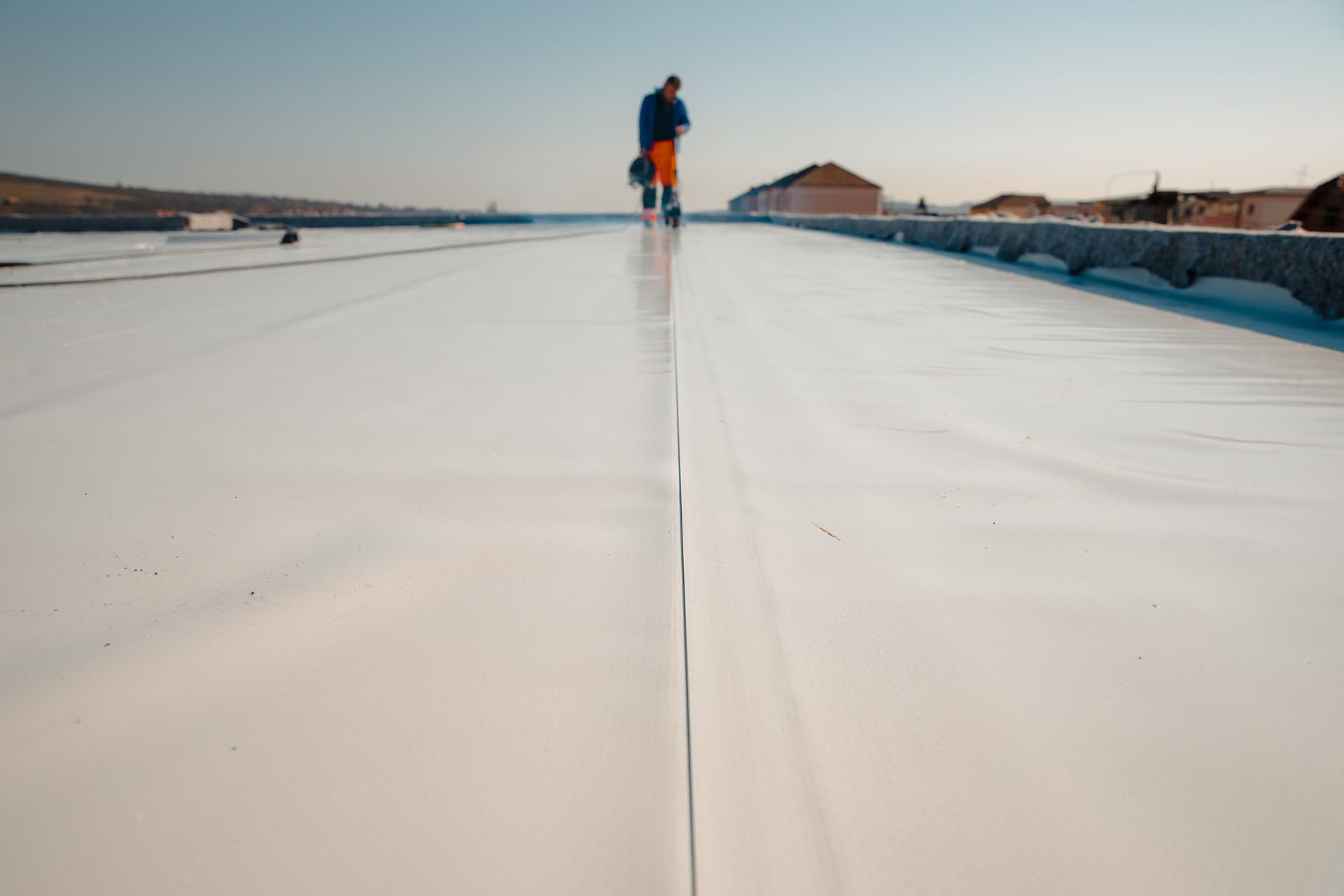
PVC is a single-ply membrane with hot-air welded seams, known for its resistance to chemicals, grease, and fire. It's the system we specify when a roof faces exposures that would shorten the life of other membranes.
Restaurants and commercial kitchens, food processing, and manufacturing facilities with rooftop exhaust are typical candidates, along with any building where fire performance is a priority.
PVC at a glance
- Membrane thicknesses from 50 to 80 mil
- Mechanically attached or fully adhered assemblies
- Hot-air welded seams for a fully bonded, watertight surface
- Excellent resistance to grease, animal fats, and many chemicals
- Strong fire performance
- Manufacturer material and system (NDL) warranty options
Where it fits
PVC is the right call where rooftop exhaust carries grease or chemicals, or where fire resistance is a driving requirement — restaurants, food processing, and many manufacturing roofs.
Assembly & attachment options
PVC is installed mechanically attached or fully adhered over insulation and cover board specified for the building's uplift and thermal requirements, with all seams hot-air welded.
Advantages & trade-offs
PVC's chemical and fire resistance and its welded seams are the core advantages. The trade-off is cost — PVC typically carries a higher installed price than TPO, so on a roof without chemical or fire drivers, TPO usually delivers similar performance for less.
Warranty & when we'd recommend something else
Manufacturer material and system warranties, including NDL options on qualifying assemblies, are available; we confirm the exact coverage for your project. Without grease, chemical, or fire drivers, we'd typically recommend TPO on cost; for very large, simple fields on a tight budget, EPDM may fit better.
Commercial Roofing Systems & Manufacturers


Need an assessment of your roof?
Schedule a commercial roof inspection with a licensed contractor. We'll evaluate the existing system, document current conditions, and provide clear repair, restoration, or replacement options.